Road trip Australia: driving the Great Ocean Road
Road trip Australia: driving tips for the Great Ocean Road
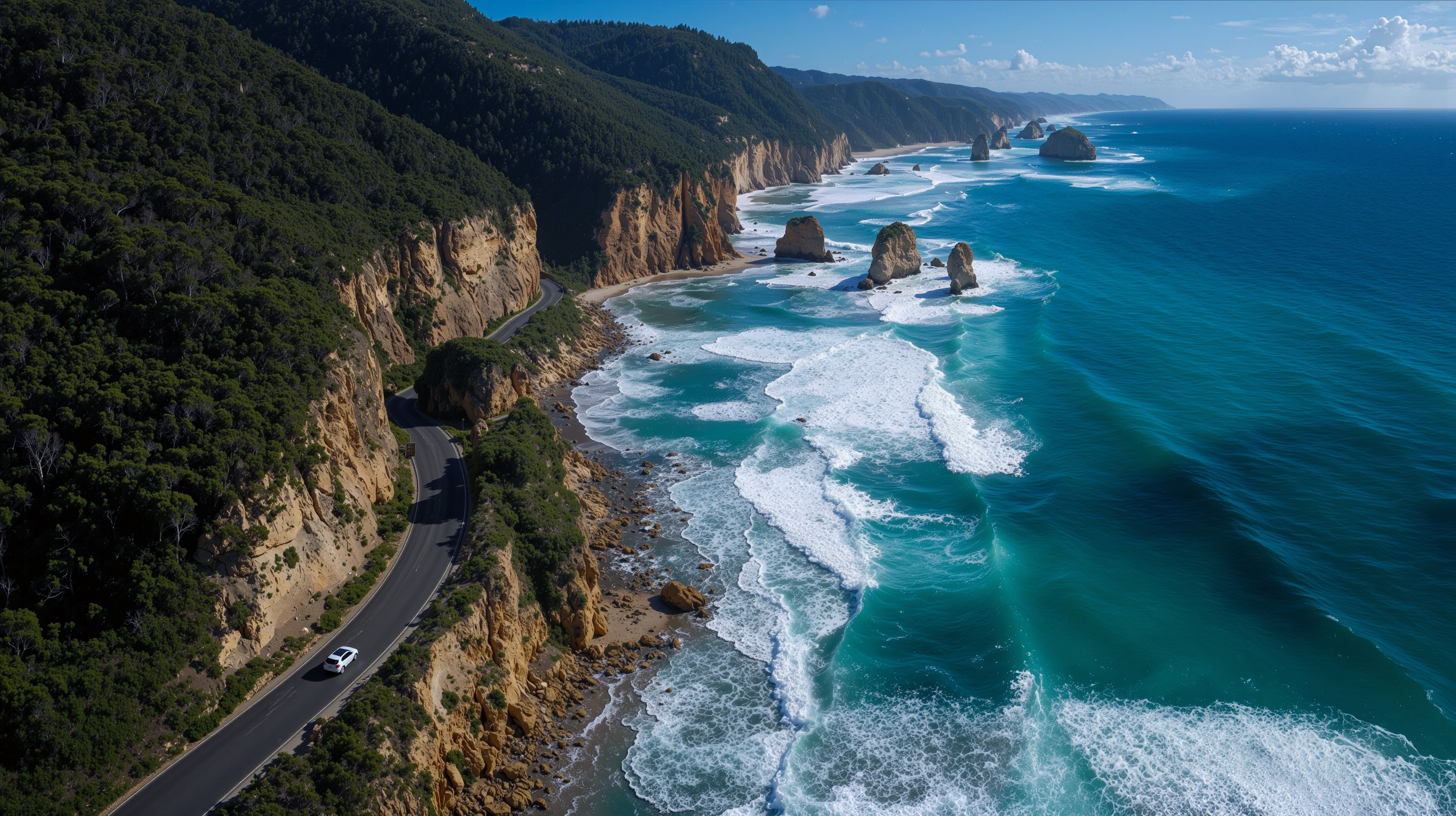
The Great Ocean Road is one of those drives you hear about long before you actually take it. You see the photos: cliffs dropping into the ocean, the Twelve Apostles standing in the waves. Then one day you pick up a rental car outside Melbourne, ocean to your right, and it all becomes real.
This road trip is one of the most famous in the world, and for good reason. But it doesn’t run itself. Driving in Australia comes with its own rules, distances are bigger than they look on a map, and the vehicle you choose matters a lot. Whether you’re heading out from Melbourne for two days or working this route into a longer trip toward Adelaide or the outback, here’s what you need to know before you hit the road.
What to know before driving in Australia
The Great Ocean Road stretches roughly 250 kilometers between Torquay and Allansford, in the state of Victoria. But if the route extends to Adelaide, as many travelers do, the total distance exceeds 900 kilometers. Plan for at least three days for the coastal stretch alone, and closer to five to seven days if you want to stop, hike, explore the national parks, and keep daily driving under three hours.
The first thing to get right is driving on the left. If you’ve never driven in a left-hand traffic country, the first few kilometers take real concentration. The trickiest part isn’t straight-line driving, it’s the reflex at intersections: the instinct to pull onto the wrong side. A simple trick: before every departure, say to yourself “keep left.” Roundabouts run in the opposite direction, and speed limits outside cities are typically 100 km/h. In school or residential zones, they drop to 40 km/h.
One thing many travelers overlook: wildlife on the road. Kangaroos and wombats cross regularly, especially at dawn and dusk. The warning signs along the Great Ocean Road are not decorative. Avoid driving at night in rural areas, particularly if you’re not used to Australian roads.
Best time for this road trip? September to November, during the southern spring. The landscapes are at their finest, beaches start to warm up, the light is beautiful in the late afternoon, and sites like the Twelve Apostles are far less crowded than in January. Australian summer (December to February) draws big crowds, rental prices rise, and the heat can make certain stretches exhausting.
| Good to know |
| To drive in Australia, your national license must be accompanied by an International Driving Permit (IDP) or an official NAATI-certified translation. The IDP can be obtained through AAA or your country's automobile association before departure. Processing times vary, so apply well in advance. It is valid for one year. Note that requirements may vary slightly by state. |
Which vehicle should you rent for your road trip?
This is often the last question people ask, even though it’s one of the first decisions to make. The vehicle sets the tone for the whole trip: comfort, budget, and where you can actually go.
For the Great Ocean Road itself, a standard rental car is more than enough. The road is paved, well-maintained, and accessible to any vehicle. But if the road trip extends beyond that, into inland national parks, the outback, or north toward Darwin, an SUV makes a real difference. Unpaved tracks are common as soon as you leave the main highways, and some national parks are strictly off-limits to two-wheel-drive vehicles.
A van is another solid option, especially popular with travelers who want to combine rental vehicle and accommodation. It lets you sleep on-site, cut down on lodging costs, and stop wherever you want without worrying about campsite availability. A well-equipped van also opens the door to free camping, widely practiced in Australia in designated areas outside protected parks. The downside: higher fuel consumption, trickier city parking, and a longer adjustment period behind the wheel. For a first Australian road trip, a rental car is usually the simpler and more economical choice.
Europcar offers vehicles for every type of trip, from compact cars to SUVs, with pickup options in Melbourne, Sydney, or Perth. For trips heading north toward Darwin or Alice Springs, check the one-way drop-off conditions: some routes are available and can simplify the logistics considerably. One key thing to confirm at booking: unlimited mileage, which is essentially non-negotiable on a road trip of this scale.
Key stops between Melbourne and Adelaide
The official start of the Great Ocean Road is Torquay, about an hour from Melbourne. Within the first few kilometers, the scenery takes over: the road follows the coast, cliffs appear, and the ocean is everywhere. It becomes pretty clear quickly why this route ranks among the world’s great drives.
Lorne and Apollo Bay
Lorne is the first stop worth lingering at. It’s a pleasant town with good beaches, and a solid base for a night before pushing west. Apollo Bay, an hour further, is quieter and often preferred by travelers looking to avoid the crowds. It’s also the last real resupply point before the Twelve Apostles: fill up on gas here, as stations get sparse on the next stretch.
Great Otway National Park
Between Apollo Bay and the Twelve Apostles, the road briefly leaves the coast and cuts through Great Otway National Park. The scenery shifts completely: giant fern forests, waterfalls, shaded walking trails. The Mait’s Rest Rainforest Walk is a 45-minute loop well worth the stop. This park is one of Victoria’s green lungs, and one of the best places to spot Australian wildlife, including koalas perched in eucalyptus trees along the roadside.
The Twelve Apostles
This is the highlight of the trip for most people. The rock formations rising out of the ocean are spectacular, but the site gets busy. To avoid the crowds and make the most of the light, arrive early, ideally before 9 AM, or in the late afternoon when the low sun turns the rocks a deep golden color. Sunset here is one of the most photographed in Australia, and for good reason.
From Port Campbell to Adelaide
Past the Twelve Apostles, the road continues west with more impressive sites: Loch Ard Gorge, London Arch, and the cliffs of Bay of Islands. After Warrnambool, the coastline gradually gives way to more rural landscapes. Some travelers turn inland here, heading toward the outback and Alice Springs. Others stay coastal all the way to Adelaide, roughly five hours away. For those wanting to push further, two weeks is enough to connect Adelaide to Perth along the Great Australian Bight, one of the most remote and rewarding drives in the country.
Budget, insurance, and camping: what you need to know
A road trip in Australia also requires financial planning. Distances are long, gas is expensive, and unexpected costs can add up quickly if you haven’t thought through the main budget lines.
How much should you budget?
For a one-week road trip on the Great Ocean Road, plan on roughly $110 to $200 USD per day for two people, all-in: vehicle rental, fuel, accommodation, and meals. Gas is one of the most variable costs. Prices fluctuate by day and by station, with sometimes significant gaps between a city station and an isolated one on the road. The reflex to build: fill up whenever the tank drops below half.
The budget can drop meaningfully with camping. Australia is one of the few countries where free camping is still possible in certain national zones outside protected parks. Apps like WikiCamps Australia list authorized spots, available facilities, and traveler reviews. An official campsite averages around $20 to $30 USD per night. For van travelers, this often becomes the natural way to live the trip: flexible, affordable, and with no booking stress.
Insurance: have you really covered everything?
This is the point most people gloss over, and the one that can turn a minor mishap into a real problem. The standard excess can reach several thousand Australian dollars in the event of damage. Reducing or eliminating that excess has a daily surcharge, but it’s usually the smarter call on a multi-day road trip. Before taking the rental company’s insurance, check what your credit card covers. Some premium cards include rental car coverage abroad, subject to conditions. Vans and 4x4s are sometimes excluded.
Note: In Australia, fines are automated on many roads. Speed cameras and surveillance systems are widespread, including on stretches that look completely empty. Fines are steep and can be forwarded to the rental company, then passed on to the driver. Staying within speed limits isn’t just a safety matter, it’s a budget matter.
Key takeaways
- Plan for at least 3 days for the Great Ocean Road alone, 5 to 7 days to reach Adelaide
- Drive on the left: the reflex comes quickly, intersections are the trickiest part
- An International Driving Permit is required — apply before departure
- Avoid driving at night: wildlife on the road is a real hazard
- Fill up at Apollo Bay before the Twelve Apostles, stations thin out after that
- Average budget: $110 to $200 USD per day for two people, all-in
- Check your credit card coverage before adding the rental company’s insurance
- Speed cameras are everywhere, including on roads that appear deserted
- Best season: September to November for lighter crowds and great light
- For your rental, Europcar has options out of Melbourne, from compact cars to SUVs
FAQ: road trip in Australia, your top questions
Do you need a visa to drive in Australia?
Yes. Most international travelers need a visa to enter Australia, even for a short stay. The most common option is the eVisitor visa (subclass 651), which is free and valid for one year with stays of up to 3 months per entry. For longer stays, the Working Holiday Visa allows you to remain for up to one, two, or three years depending on conditions, while working locally. Applications are completed online before departure.
How long does this road trip take?
It depends on the itinerary. For the Great Ocean Road alone, count a minimum of three days. To reach Adelaide, plan five to seven days. If the trip extends north toward Darwin or Alice Springs in the outback, two to three weeks become necessary to take in the national parks without rushing.
Can you do this road trip with no prior experience driving abroad?
Yes, as long as you plan ahead. Driving on the left comes naturally within a few hours on the road, and the Great Ocean Road is well-signed. Travelers arriving in Melbourne for the first time can ease into it gradually: city traffic is dense but orderly, and the roads toward Torquay are well-marked.
What’s the nightlife like along the route?
Essentially nonexistent between Apollo Bay and Port Campbell. This is one of the defining features of this route: life revolves around coastal villages, campsites, and national parks. Evenings mean early dinners, stargazing, and watching for wildlife along the road. It’s a different way to travel, and for many people, one of the best.
What’s the best time of year for the Great Ocean Road?
The southern spring, September to November, is the most recommended period. Temperatures are comfortable, landscapes are at their best, and sites like the Twelve Apostles are far less crowded than in midsummer. Australian summer (December to February) is possible but hot and busy, with higher rental prices. Winter (June to August) offers a distinctive light and lower rates, though some days along the coast can be wet and windy.
What budget should you plan for a one-week road trip?
For two people in a rental car with nights split between camping and budget accommodation, plan on $110 to $200 USD per day all-in: vehicle rental, gas, lodging, and food. The budget drops with free camping and cooking in the van. It rises with seafront hotels or restaurant meals. Either way, leave room for the unexpected: an insurance excess, an extra night, or a last-minute activity can add up fast.
Is this road trip suitable for all types of travelers?
Yes, and that’s one of its strengths. Families with kids enjoy the nature stops and easy access to the main sites. Couples find end-of-the-world moments, especially at sunset over the Twelve Apostles. Solo travelers in vans feel safe and connected: campgrounds are welcoming and the road-tripper community is easy to find along the route. The Great Ocean Road works at its own pace, and that’s a big part of why it stays with you.